主要内容 #
1. 一般的输出 #
前面,我们已经讲过了字符串的输出。
char str[] = "apple";
std::cout << str << std::endl;   // 输出字符串
对于字符串的输出,还可以通过循环来处理。
2. 循环输出 #
小练习:
请定义一个字符串 “Hello Dashima!”,然后分别使用 while 和 for,输出字符串。
这个字符串的长度为 14
/*
    请完成后,查看示例程序


*/
示例代码:
#include < iostream >
using namespace std;

int main()
{
    char dashima[] = "Hello Dashima!";

    // while
    int i(0);
    cout << "Using while: " << endl;
    while (i < 14)
        cout << dashima[i++];
    cout << endl << endl;

    // for 1
    cout << "Using for 1: " << endl;
    for (int j = 0; j < 14; j++)
        cout << dashima[j];
    cout << endl << endl;

    // for 2
    cout << "Using for 2: " << endl;
    for (int j = 0; j < 14; )
        cout << dashima[j++];
    cout << endl << endl;

    return 0;
}
上面的代码,使用了一个关键的前提条件,就是字符串的长度是 14 。而这是可以从题目中得到的。
4. 字符串的长度 #
下面,假如我们不能够直接使用“字符串的长度为 15 ”这个条件,要怎么做呢?
当然,首要问题就是,我们怎么从字符串本身,推导出来字符串的长度?请试一试。
提示:sizeof()
#include < iostream >
using namespace std;

int main()
{
    char dashima[] = "Hello Dashima!";

    int size = /* 请补全代码 */;

    cout << "size is " << size << endl;

    return 0;
}
示例代码:
#include < iostream >
using namespace std;

int main()
{
    char dashima[] = "Hello Dashima!";

    int size = sizeof(dashima) / sizeof(dashima[0]) - 1;

    cout << "size is " << size << endl;

    return 0;
}
说明:
下面的是字符串“Hello Dashima!”的表格形式,这里第五位的 32 是空格的十进制 ACSII 码值。

// 表示的是一个字符的大小
sizeof(dashima[0]);

// 相当于
sizeof('H');

// 相当于
sizeof(char);
求得一个字符的大小后,再来求一下字符串的总体大小。
// 表示的是字符串的总体大小
sizeof(dashima);
那么,两者相除,自然就可以得到字符串的长度。所以
// 字符串中的元素数量
int size = sizeof(dashima) / sizeof(dashima[0]) - 1;
为什么还需要减一呢?因为真实情况的字符串样子,是这样的:

最后一位,存在一个(/0)。注意
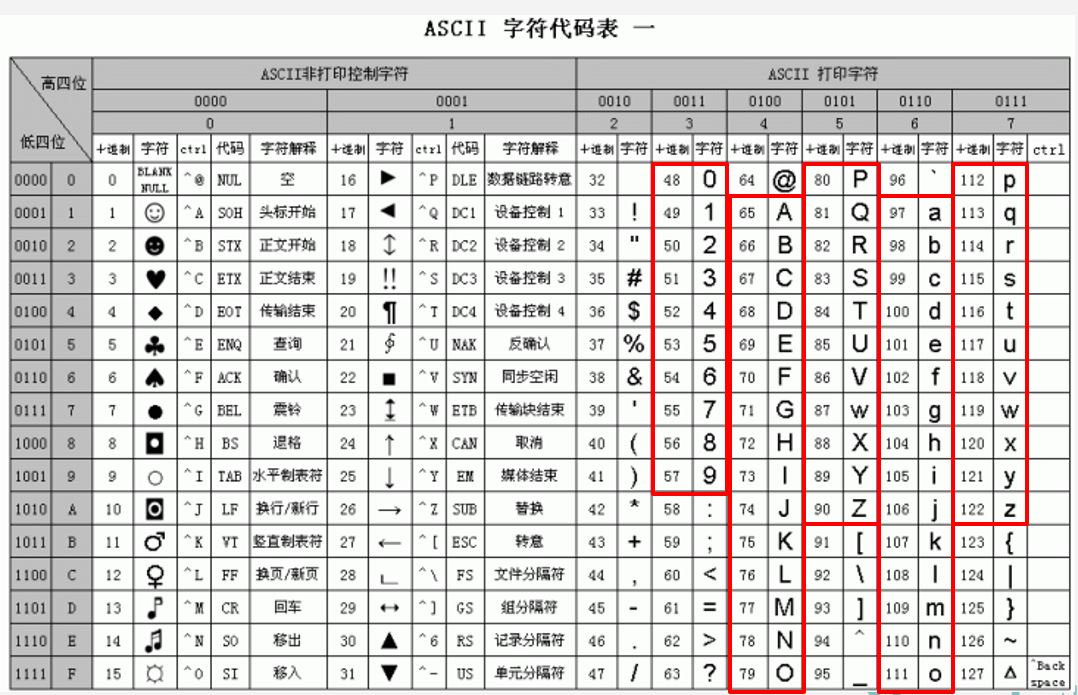
这个(/0)也是一个十进制 ACSII 码值,它是ASCII表的第一个字符,表示空。
下面再给出 ASCII 表,方便大家查找。
最后,请试一下,用新学习的方法,改写 2.循环输出 中的代码。
完成后,请参考下面代码。
4.1 使用 while #
#include < iostream >
using namespace std;

int main()
{
    char dashima[] = "Hello Dashima!";
    int size = sizeof(dashima) / sizeof(dashima[0]) - 1;

    // while
    int i(0);
    cout << "Using while: " << endl;
    while (i < size)
        cout << dashima[i++];

    return 0;
}
4.2 使用 for #
#include < iostream >
using namespace std;

int main()
{
    char dashima[] = "Hello Dashima!";
    int size = sizeof(dashima) / sizeof(dashima[0]) - 1;

    // for 1
    cout << "Using for 1: " << endl;
    for (int j = 0; j < size; j++)
        cout << dashima[j];
    cout << endl << endl;

    // for 2
    cout << "Using for 2: " << endl;
    for (int j = 0; j < size; )
        cout << dashima[j++];
    cout << endl << endl;

    return 0;
}
习题 #



